
Eight months in, and what started as an idea on paper has become a living, interdisciplinary effort — twenty researchers deep, with the most exciting work still ahead. When the project team opened applications for the Senokos watermill documentation project last autumn, they expected a modest response. Instead, more than 120 people applied — a sign that the intersection of living heritage, hands-on fieldwork, and interdisciplinary collaboration resonates far beyond the usual academic circles.
The project’s goal is ambitious but focused: to document, interpret, and promote the cultural heritage of traditional watermills in the village of Senokos, combining rigorous research with student engagement and genuine community involvement, and building a case for their future preservation and integration into cultural and tourism initiatives.
“The high number of applications exceeded initial expectations, enabling the selection of a highly interdisciplinary group — and significantly strengthening the project’s scope.”
From over a hundred applications, twenty participants were selected — students and young professionals spanning a remarkably wide range of disciplines: Archaeology, Architecture, Ethnology, Anthropology, Civil engineering, Mechanical engineering, Conservation, Visual arts and Media production.
This breadth is not incidental — it is central to how the project works. A watermill is not only an architectural object; it is a piece of engineering, an ethnographic subject, a landscape element, and a story waiting to be told. Understanding it fully requires all of these lenses at once.
The first major gathering was a two-day seminar at the Faculty of Philosophy, University of Belgrade, where five expert lectures covered archaeology, cultural heritage protection, architecture, and ethnology. Participant evaluations indicated a high level of satisfaction — but the real work began after the lectures ended.
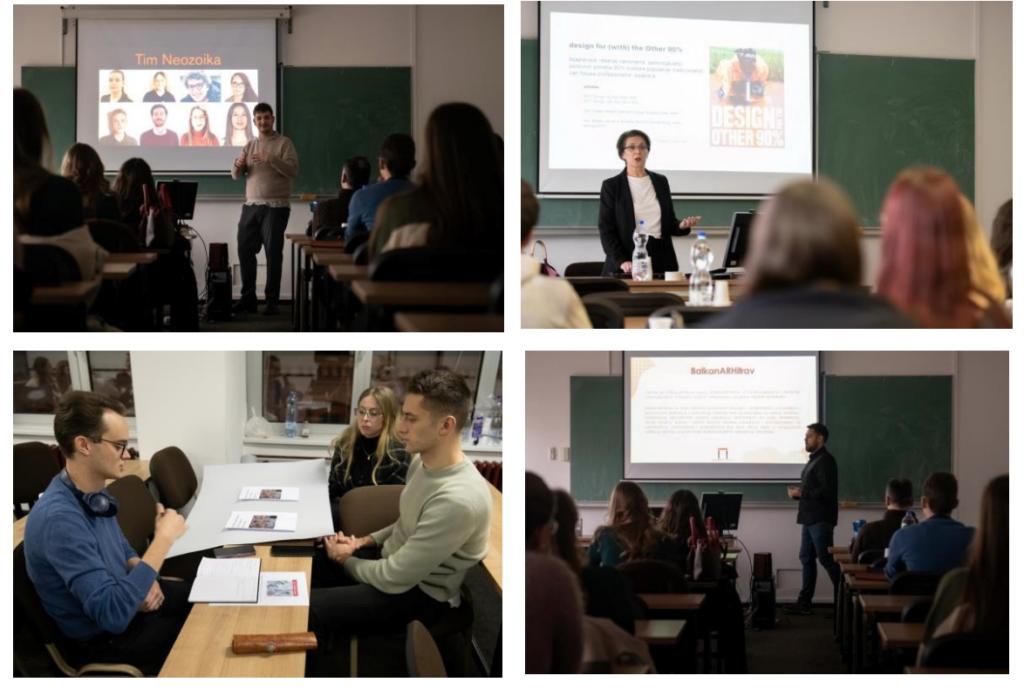
Participants were divided into four thematic research groups, each assigned a distinct preparatory task: architectural and typological analysis of the watermill and its cultural landscape; field reconnaissance preparation and mapping of ruined watermills; development of questionnaires and methodologies for ethnographic and intangible heritage research; and archival research to build a narrative framework for a project documentary.
In February, the groups reconvened at Ložionica — Creative Industries Center in Belgrade, a collaboration that was not originally planned but proved invaluable. Each group presented their progress, received feedback from the original lecturers, and collectively refined the strategy for fieldwork. The addition of Ložionica as a partner is one of several positive adjustments made during this phase.
After the coordination meeting, the teams are ready for the fieldwork for recording the watermill’s architecture, construction method, and current physical state in detail. Alongside that, teams on the ground are mapping the remains of other mills in the surrounding area and analysing the spatial logic of how they were built and used. Young people have been talking to local residents. Their memories, stories, and practical knowledge about how these structures functioned are a kind of evidence no archive can replace. And running throughout: digital documentation — photography, video recording, 3D modelling, and mapping — building a dataset for future analysis and conservation work.
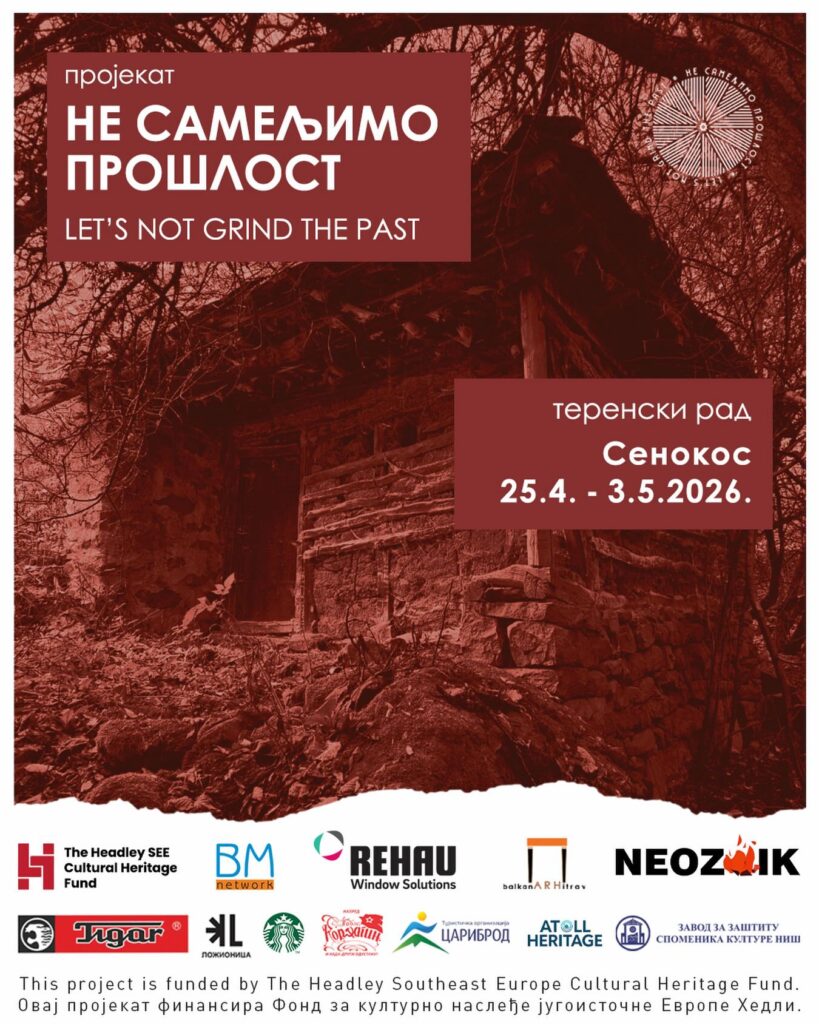
Over the following months, the project will move into community engagement, technical documentation, and production of the documentary. The project runs through 31 December 2026, with much of the most exciting work still to come.
The story of the Senokos watermills is old. The effort to understand, protect, and share it is very much alive.